
Best Professional Camera Tripod in 2026: What to Buy and Why
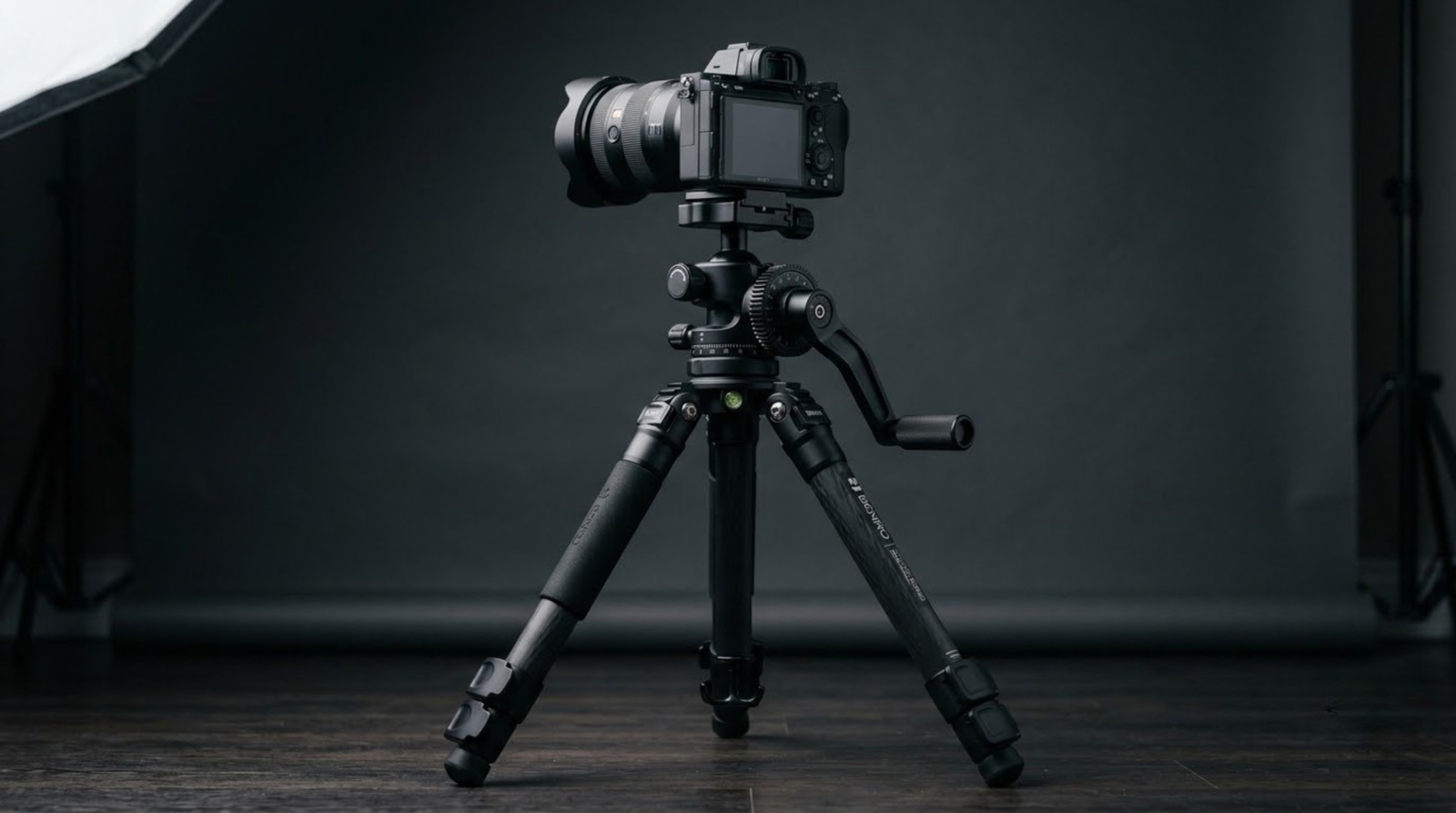
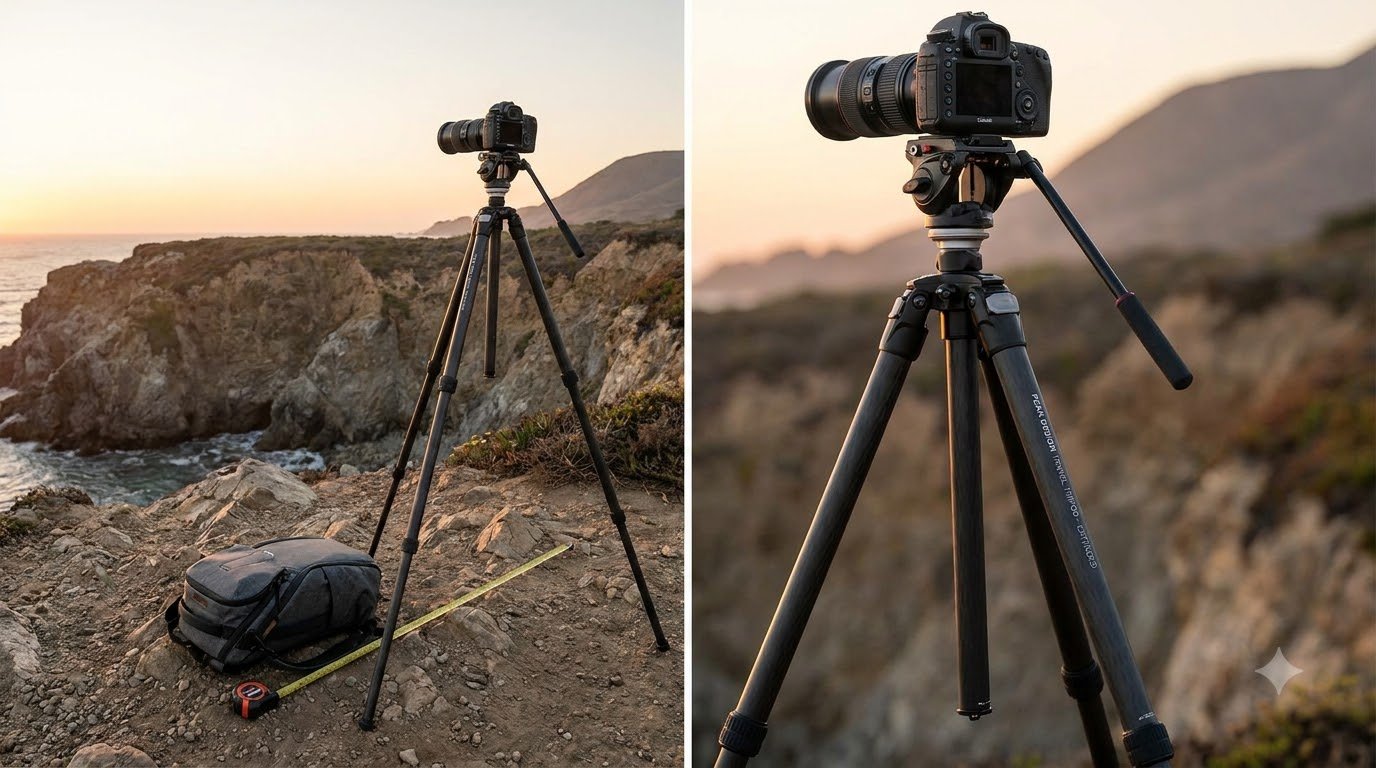
A professional camera tripod needs to do three things well: hold real weight without wobble, extend to a usable working height, and survive years of setup and teardown. That’s it. Everything else — carbon fiber, fluid heads, quick-release plates — is a refinement on top of those basics. If you’re shopping for a tripod to support a DSLR, mirrorless body, or heavier video rig, here’s what actually separates a professional-grade tripod from a toy.
For photographers and videographers across India shooting everything from studio product photography to outdoor events, the right tripod is the difference between a shoot that goes smoothly and one where you’re fighting your own gear.
What “Professional” Actually Means in a Tripod
The word gets used loosely, but a genuinely professional tripod holds up under three specific tests:
Load capacity with margin. Manufacturers rate tripods for a maximum load, but that number assumes ideal conditions. A tripod rated for 10 kg should comfortably handle a 5-6 kg setup with room to spare — not be pushed to its limit every time you attach a lens.
Stability at full extension. Any tripod looks steady collapsed. The real test is fully extended, with weight on it, on a slightly uneven surface. Cheap tripods flex and sway at height; a professional one locks solid.
Build quality that survives repetition. Leg locks, head mechanisms, and center columns get used hundreds of times a year on a working tripod. Plastic components that feel fine on day one often crack or loosen within months. Metal leg locks and a reinforced head are worth paying for.
Features That Matter Most
Load Capacity
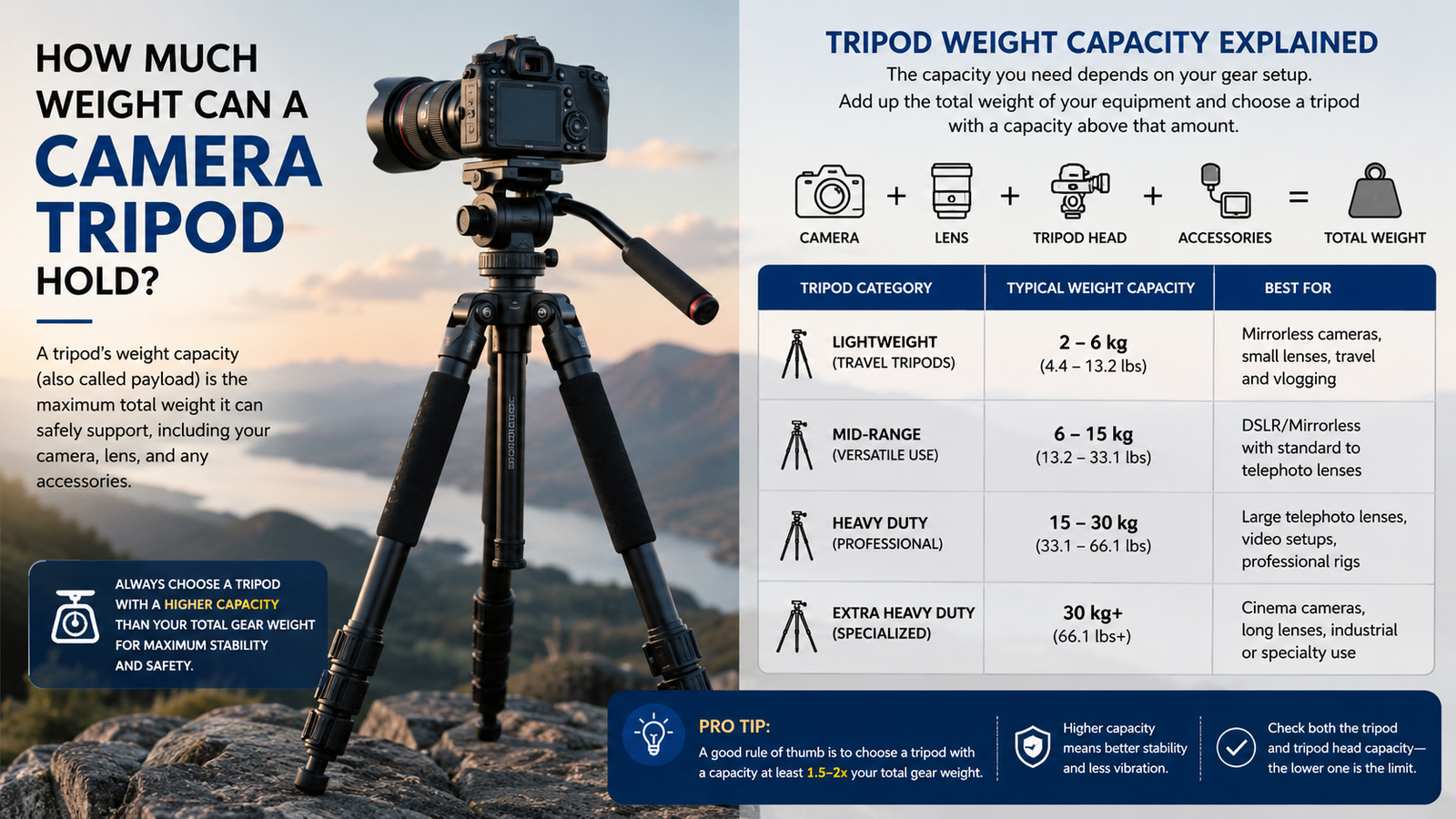
Look for a tripod rated well above your actual gear weight. As a rule of thumb, double your heaviest realistic setup and use that as your minimum required rating. A DSLR with a 70-200mm lens can easily hit 3-4 kg, so a tripod rated for 8-10 kg gives you genuine safety margin rather than running at its ceiling.
Build Material: Aluminium vs Carbon Fiber
Aluminium remains the standard choice for most professional and semi-professional shooters — it’s strong, affordable, and only marginally heavier than carbon fiber in practice. Carbon fiber shines specifically for vibration dampening on long exposures and for photographers who travel constantly and feel every extra gram. Unless that’s your specific use case, a well-built aluminium tripod delivers professional performance without the premium price.
Head Type
A 360-degree ball head is the most flexible option for photography — quick reframing, secure locking, and compatibility with almost any camera body. If your work leans heavily toward video, a fluid head adds smoother panning, but for hybrid shooters covering photo and video, a solid ball head is the more practical all-rounder.
Working Height Range
A professional tripod should comfortably reach eye level or above without extending the center column all the way up, since a fully extended column is the least stable configuration. A tripod with a tall maximum height and a reasonable minimum height gives you flexibility for standing shots, seated shots, and low-angle work without buying a second tripod.
Portability
Professional doesn’t have to mean heavy. Look for a tripod that includes a carry bag and folds down to a manageable length, so it’s something you’ll actually bring to every shoot instead of leaving in the studio.
Adofys 76 Inch Professional Aluminium Camera Tripod
The Adofys 76 – Professional Aluminium Camera Tripod is built around the fundamentals that define a professional-grade stand:
- Load capacity up to 10 kg — enough margin for a DSLR or mirrorless body with a heavier lens, plus accessories like a mic or light
- 76-inch maximum operating height, giving you standing-eye-level framing and overhead angles without over-extending the column
- Aluminium construction for durability without the cost of carbon fiber
- Included travel bag and phone holder, so the same tripod covers cameras, phones, and even projectors out of the box
- Universal compatibility with DSLRs, mirrorless cameras, action cameras, and smartphones
It’s a practical pick for photographers who need one reliable tripod for studio work, outdoor shoots, and everyday content creation — without needing to invest in a specialist carbon fiber rig.
Who Actually Needs a Professional Tripod
- Working photographers shooting portraits, events, or products who need consistent, reliable support day after day
- Videographers and content creators who need a stable base for interviews, product demos, and talking-head content
- Studio owners running product photography for e-commerce who need repeatable, stable setups
- Serious hobbyists upgrading from a flimsy starter tripod that can’t keep up with heavier gear
Questions to Ask Before You Buy
- Does the load rating comfortably exceed my heaviest current and likely future gear?
- Is the head a ball head or fluid head, and does it match how I actually shoot?
- How stable is it at full height, not just when collapsed?
- Does it include a carry bag, and how compact is it folded?
- Can it double for phone-based content, or will I need a separate mount?
- What’s the warranty period, and how are leg lock or head failures handled?
Frequently Asked Questions
What load capacity should a professional camera tripod have?
Aim for a tripod rated at least double your heaviest realistic camera and lens combination. For most DSLR or mirrorless setups with a standard zoom lens, a rating of 8-10 kg gives comfortable safety margin.
Is aluminium good enough for professional use, or do I need carbon fiber?
Aluminium is genuinely professional-grade for the vast majority of shooters. Carbon fiber offers marginal weight savings and slightly better vibration dampening, which matters most for long-exposure and travel-heavy photographers, but it isn’t required for stability or durability.
What’s the difference between a ball head and a fluid head?
A ball head locks in any position with one control, making it fast and flexible for photography. A fluid head is designed for smooth, controlled panning and tilting, which benefits video work specifically but is less convenient for quick photo reframing.
Can one tripod work for both photography and video?
Yes, especially with a ball head that locks securely. It won’t match a dedicated fluid head for cinematic pans, but it handles static video setups, interviews, and hybrid shooting comfortably.
How tall should a professional tripod extend?
Look for a maximum height around 70-76 inches so you can shoot at or above eye level without fully extending the center column, which keeps the setup more stable.
Ready to Upgrade to a Professional Setup?
A professional camera tripod is one of the few pieces of gear that outlasts multiple camera bodies, so it’s worth getting right the first time. Check out the Adofys 76 inch Professional Aluminium Camera Tripod for a sturdy, versatile stand that comes with a travel bag and phone holder included.
Categories
Latest Post
Tripod with Bubble Level: Your Guide to Perfectly Level Photos and Videos
September 24, 2026
No Comments
Camera Tripod with Phone Holder: The Ultimate 2-in-1 Setup
September 7, 2026
No Comments
Best Camera and Phone Tripod (2026 Buying Guide) | Adofys
September 7, 2026
No Comments
How Much Weight Can a Camera Tripod Hold?
September 5, 2026
No Comments
Best Heavy Duty Camera Tripod (10kg Load Capacity)
September 4, 2026
No Comments
Best Aluminium Camera Tripod | Professional 76″ Tripod | Adofys
August 24, 2026
No Comments
Best 76 Inch Camera Tripod | Professional Aluminium Tripod
August 24, 2026
No Comments
Best Camera Tripods for Every Shoot in 2026 | Adofys
August 21, 2026
No Comments